Volume 2, No. 1
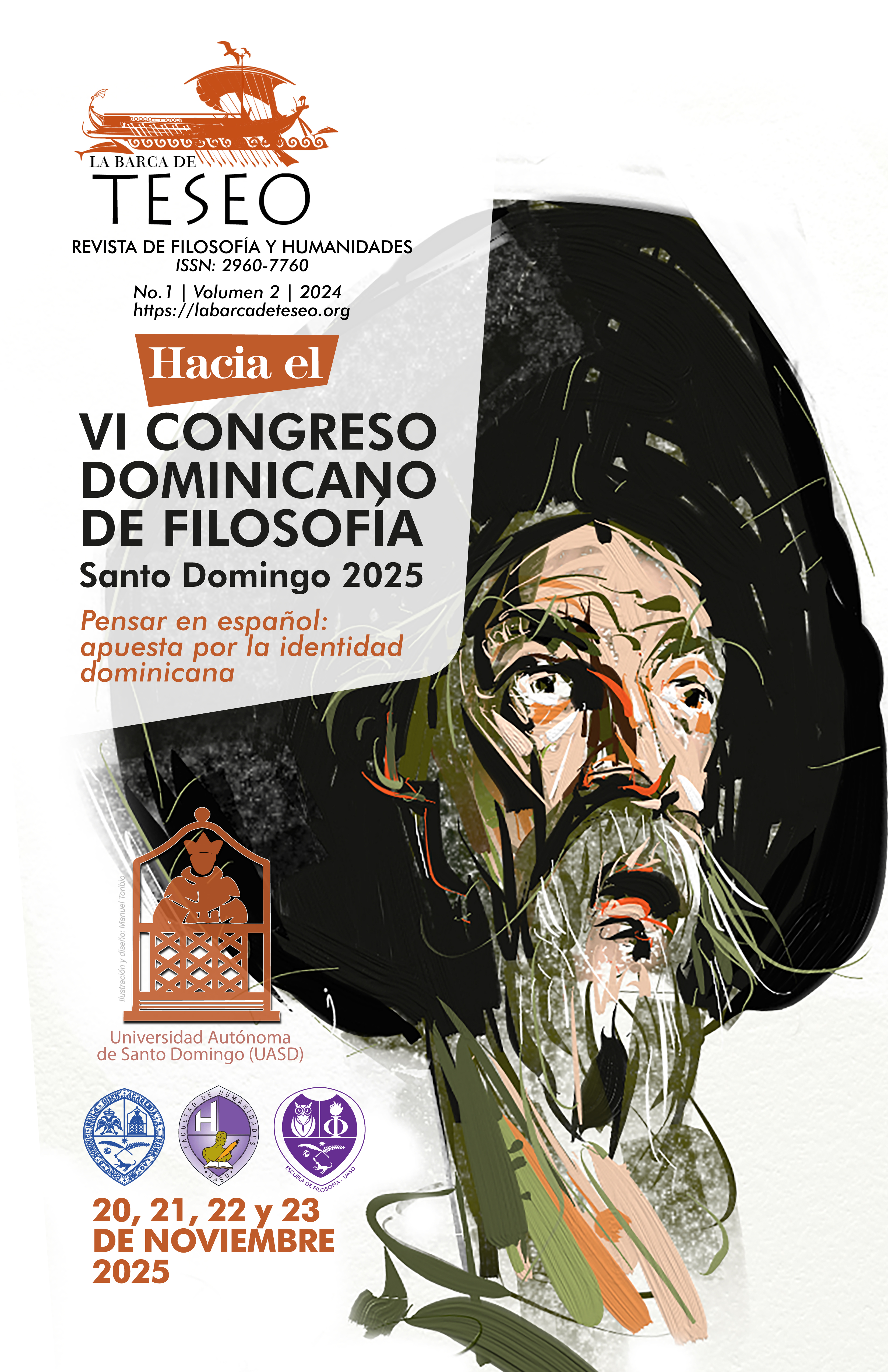
Issue description
This second issue of La Barca de Teseo journal presents five academic contributions that form a comprehensive mosaic of reflections crucial for understanding and facing contemporary challenges. The core themes revolve around three interconnected articles addressing the technological dimension of our era: Roossevelt Alcántara Tejeda's examination of technological neutrality and the principle of responsibility, Andrés Emilio Peguero Alfonseca's analysis of automation's ethical implications, and Rodny Gómez's historical perspective on John Locke's political thought. These works collectively question the supposed neutrality of technology while exploring its social and political implications.
The issue is further enriched by two complementary articles that expand the discussion into fundamental rights and religious-political reconciliation. Toribio Eutacio Germán Valdez's work on the right to a dignified death in the Dominican Republic addresses crucial questions about individual autonomy and state limits, while Julio Pernús Santiago and Caridad Castellanos Machado's study of Reconciliation Theology in socialist Cuba provides valuable insights into dialogue between seemingly irreconcilable worldviews. Together, these five articles create a multidisciplinary conversation about human dignity, social responsibility, and the ethical frameworks needed to face contemporary challenges.